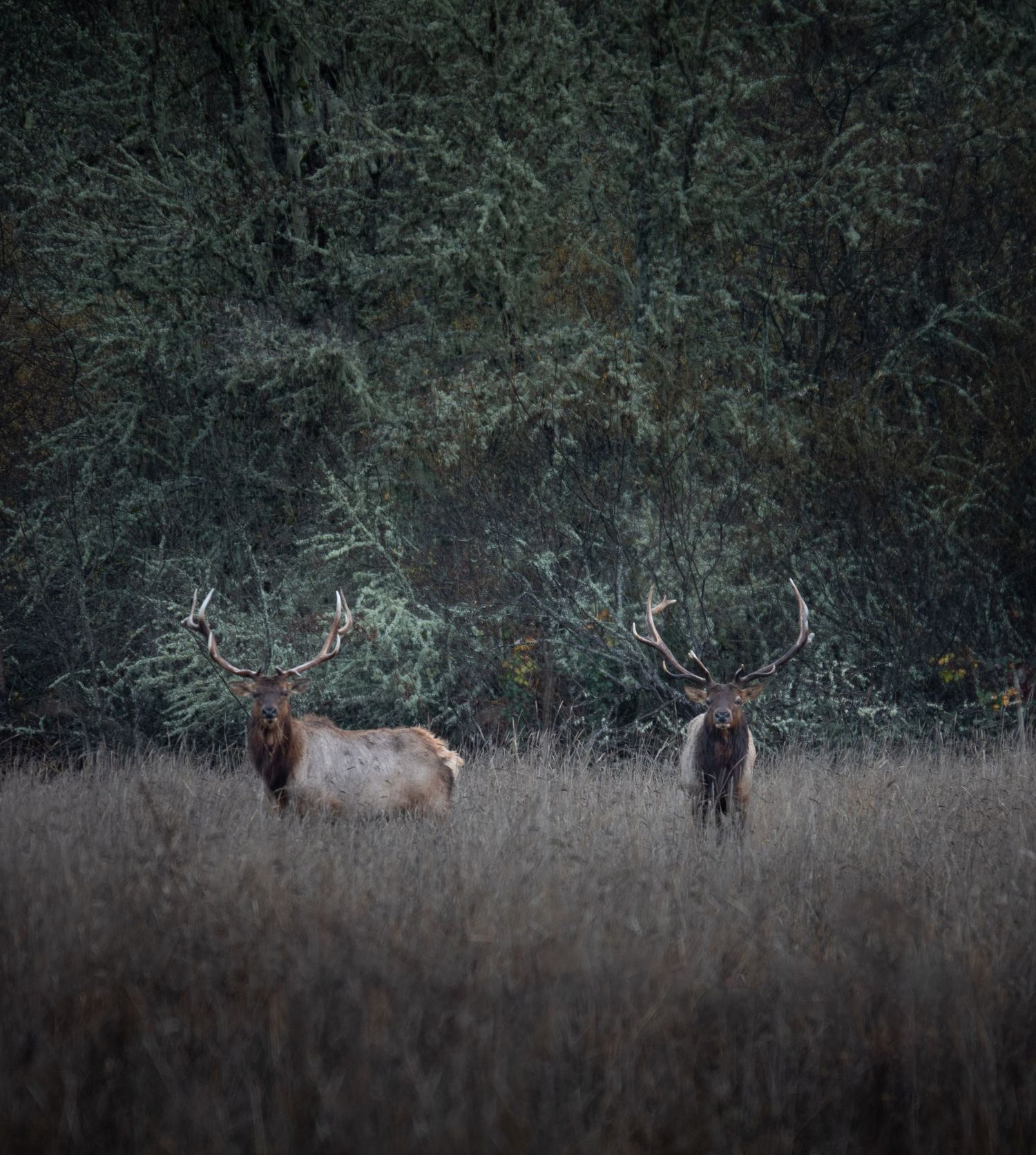
Two Elk
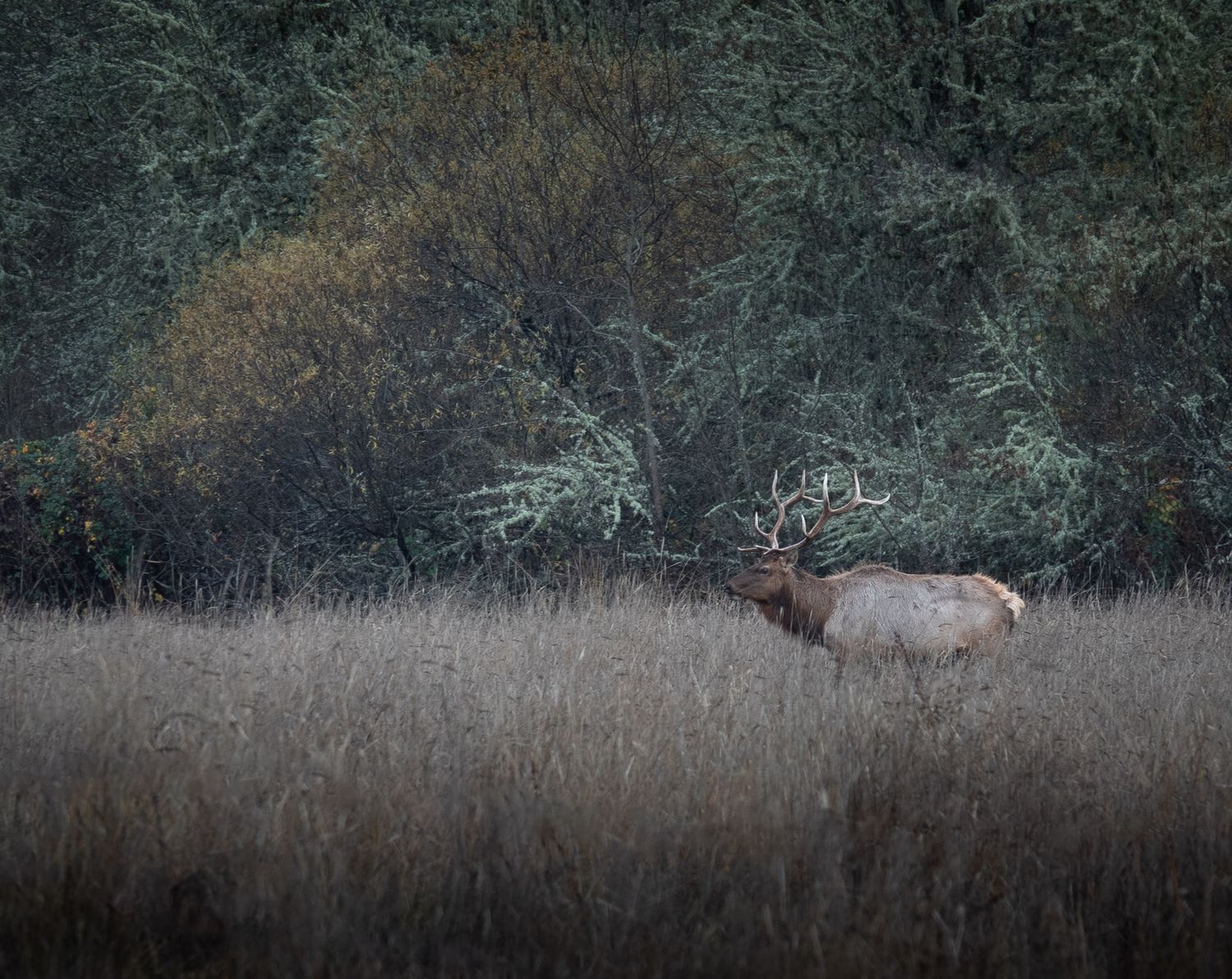
After photographing the Tule elk herd in Willits, I realized that I know relatively little about this species, and I know even less about their antlers. So I started doing some research and actually stumbled upon an article written by an old family friend. I found the information really interesting so I decided to share a segment of the article in case you find it interesting as well. I find that appreciation for a thing grows the more we learn about that thing. And we should always be learning.
"Antlers are bones. They grow from attached points on the skull called the pedicle. When antlers are growing, they are covered with vascular skin called velvet. This skin supplies oxygen and nutrients to the growing bone. The velvet has hair, nerves, and blood vessels. On average the antler will grow 0.98 inches a day. Adult bulls’ antlers can grow up to 3.9 feet and weigh more than 40 pounds. When the velvet is on the antlers they do not fight with others. They also eat a lot during this time, about 8.8 pounds to 15.4 pounds a day of food. When the antlers have become fully grown, the velvet dries and peels off. When the velvet peels off they start to fight with other bulls. During this time, they eat less because they are busy fighting, defending, and showing off to the cows how strong they are. Antlers start to grow in the spring and shed in the winter. Usually the antlers do not fall off at the same time. Most often the second will drop 4 to 7 days after casting the first antler. Therefore, you usually will not find both sets. Some shed antlers earlier if they are not nourished enough. Sometimes older bulls will shed their antlers first and it could be because they have used up most of their energy and are worn out. When the antlers fall off, squirrels, mice and rats will chew on the antlers. These antlers are full of nutrition. Elk cows do not have antlers. Caribou are the only deer species in which both females and males have antlers."
-Marisela De Santa Anna (found on mcrcd.org)